


High-CRI LED Under Cabinet Fixtures: Why Accurate Color Rendering Matters in Modern Task Areas
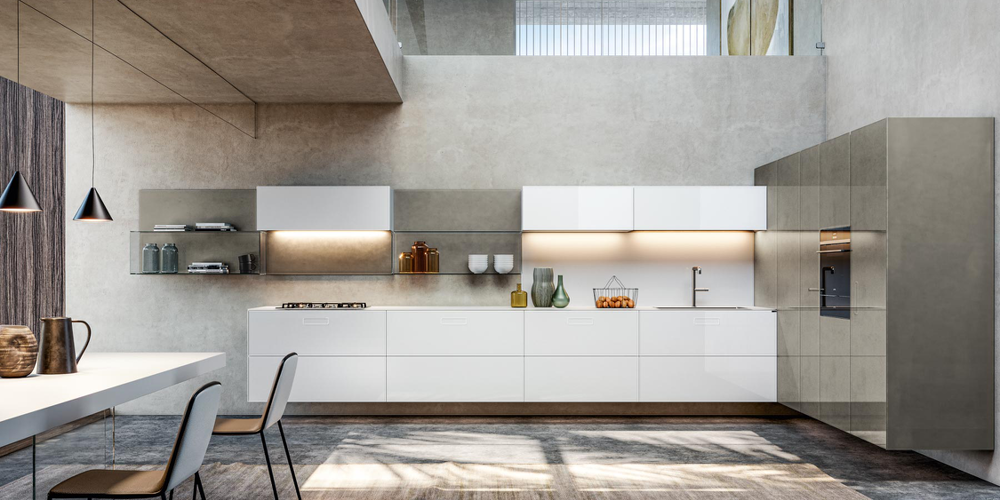
In the domain of premium task lighting, subtle engineering discrepancies often yield substantial discrepancies in real-world performance.
Among these, the Color Rendering Index (CRI) stands as a vital but frequently under-examined specification.
When we design a high-end kitchen, a medical laboratory, or a precision retail display, standard illumination is no longer sufficient.
To meet the rigorous demands of contemporary projects, specifying a high-powered Under Cabinet Light with advanced optical capabilities has transitioned from an optional upgrade to a baseline architectural necessity.
At our manufacturing facility, we have closely monitored the evolving requirements of global B2B procurement professionals.
The market has shifted past a simple demand for high lumen output; today’s buyers seek visual fidelity.
True operational precision requires a dedicated Precision Luminaire capable of replicating natural daylight conditions beneath deep cabinetry and architectural overhangs.
Understanding the technical intersection of high-fidelity color rendering and task-oriented spatial design is essential to delivering superior properties that maximize long-term return on investment.
The Technical Imperative of High CRI LED Systems
To grasp why advanced spectrum reproduction matters, we must analyze the spectral distribution of standard LEDs versus premium architectural alternatives.
Typical commercial illumination offers a CRI of approximately 80, which noticeably distorts vibrant hues, turning deep reds and natural skin tones into muted, gray variants.
In contrast, our engineering team focuses strictly on High CRI LED configurations that achieve a minimum rating of $Ra>90$, alongside a high R9 value for deep saturated reds.
This scientific calibration ensures that the light spectrum emitted closely aligns with natural sunlight.
In high-stakes environments, color accuracy prevents functional errors. For hospitality kitchens, it allows culinary experts to monitor food safety and presentation precisely.
For medical facilities and upscale laboratories, accurate color differentiation supports critical visual assessments.
By integrating high-CRI chips into an engineered linear housing, we deliver exceptional visual acuity exactly where operators require it, minimizing optical fatigue and maximizing professional output.
Optimizing Visual Comfort in Critical Task Area Lighting
The layout of localized lighting demands a profound understanding of spatial optics.
In typical workplace configurations, centralized overhead luminaires generate harsh shadows directly over primary work surfaces because the user’s body or structural cabinetry blocks the light path.
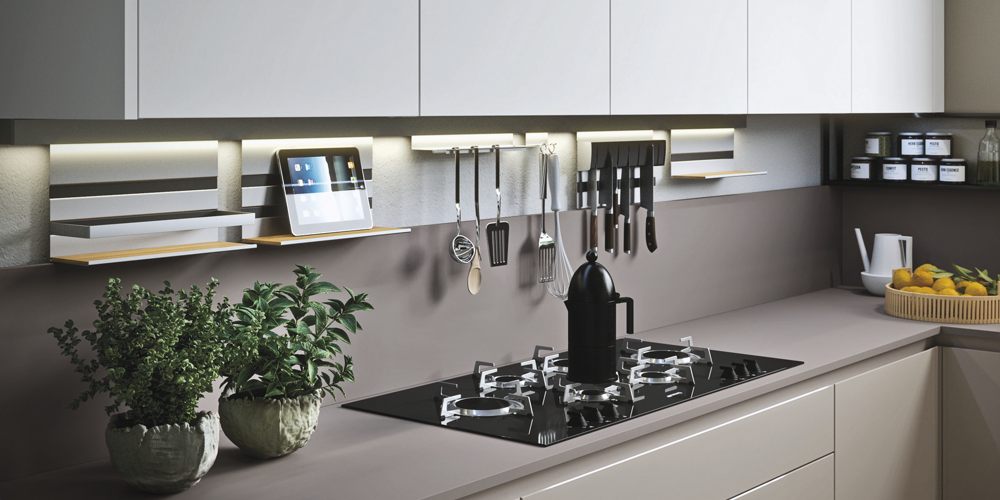
Implementing specialized Task Area Lighting directly underneath architectural structures eliminates these shadowing vulnerabilities, introducing a uniform distribution of light across horizontal workspaces.
However, simply adding light is not enough; managing glare on polished marble, stainless steel, or quartz countertops is equally vital.
Our product development strategy emphasizes advanced diffusion methods that mitigate hot spots.
By implementing customized internal micro-prismatic diffusers, our fixtures blend individual LED diodes into a seamless, high-fidelity light output.
This balanced approach protects operators from direct glare while providing intense, accurate illumination that supports continuous, high-concentration workflows without causing eye strain.
Engineering Reliability: Countertop LED Strips vs. Integrated Linear Fixtures
During competitive bidding phases, procurement managers often contrast flexible tape illumination with structured architectural fixtures.
While flexible tape serves a purpose for decorative accent lighting, high-demand commercial environments require a more robust physical format.
Rigid, low-profile Countertop LED Strips mounted inside heavy-duty extruded aluminum housings provide the mechanical durability, thermal management, and optical control demanded by global building codes.
Thermal mitigation remains the primary limiting factor for LED longevity.
Standard flexible strips mounted directly to wood or laminate surfaces insulate heat, causing rapid color shifting, lumen degradation, and early diode failure.
Our linear product series features aircraft-grade aluminum chassis acting as integrated heat sinks.
This design keeps junction temperatures exceptionally low, ensuring consistent color temperature (CCT) and maintaining a high CRI across an extended 50,000-hour operational lifespan.
For high-volume projects, this industrial reliability minimizes maintenance costs and eliminates costly warranty callbacks.
Streamlining Supply Chain and Compliance for B2B Distribution
As a trusted manufacturing partner, we understand that technical performance must be paired with streamlined deployment.
Our high-fidelity linear luminaires are engineered for continuous linkable installation, allowing electrical contractors to quickly connect multiple units from a single power source.
This modular capability reduces field installation time by up to 40%, offering an immediate cost advantage in large-scale multi-family and commercial developments.
Furthermore, complete regulatory compliance is standard across our product line.
Every high-CRI fixture we manufacture undergoes rigorous laboratory verification to secure UL, CE, and RoHS certifications.
We provide comprehensive photometric IES files, detailed specification sheets, and transparent material testing documentation to support your engineering submittals.
Partnering directly with an established OEM/ODM factory guarantees your supply chain benefits from consistent manufacturing quality, stable material sourcing, and scalable production timelines designed for complex commercial schedules.
Post time: Jul-10-2026