


Understanding Voltage Standards: 12V, 24V, and Line Voltage Under Cabinet Luminaires
As commercial lighting engineers and sourcing managers evaluate architectural task illumination, selecting the optimal voltage architecture is one of the most critical decisions in the specification phase. Under cabinet lighting has evolved far beyond simple accent illumination into a highly engineered component of modern workspace design, retail displays, and hospitality environments. Having overseen the manufacturing, quality compliance, and project engineering of commercial LED systems for over a decade, I frequently assist contractors and wholesalers in navigating the trade-offs between low-voltage systems and line-voltage alternatives.
When establishing Commercial Lighting Specifications, lighting specifiers must carefully weigh factors such as voltage drop, run lengths, driver concealment, thermal management, and local electrical codes. Below is an engineering-focused breakdown of 12V, 24V, and Line Voltage systems to assist B2B procurement teams in making informed, risk-averse purchasing decisions.

1. 12V Systems: Short Runs and Compact Footprints
Historically, 12V DC systems served as the primary entry point for localized low-voltage task illumination. Today, 12V LED Cabinet Lights remain a viable choice for constrained spaces and localized, short-run applications such as display cases, residential cabinetry, or tight shelf cutouts where spatial dimensions are strictly limited.
From a technical standpoint, 12V systems operate at a lower electrical potential, offering exceptional safety against electrical shock during maintenance or repositioning. However, electrical engineers must account for the physical law of voltage drop. Because lower voltage requires higher current (amperage) to deliver equivalent wattage (P = V × I), 12V DC circuits experience noticeable voltage drop across extended wire runs. When continuous linear runs exceed 3 to 5 meters without additional power feeds, end-of-line LEDs may suffer from diminished lumen output and color temperature shifts.
For commercial B2B procurement, 12V configurations are recommended primarily for localized, standalone fixtures or custom retail displays rather than extensive, continuous architectural office installations.
2. 24V Systems: The Commercial Standard for Low Voltage Task Lighting
For medium-to-large commercial projects, 24V DC has firmly established itself as the industry standard for Low Voltage Task Lighting. Operating at double the voltage of a 12V circuit, 24V systems effectively cut the required current in half for the same power consumption.
This reduction in current yields several distinct advantages for commercial specifiers:
- Extended Run Lengths: 24V Under Cabinet Luminaires can sustain continuous runs up to 10–15 meters (depending on PCB copper weight and LED density) from a single power source without perceptible lumen attenuation.
- Enhanced Thermal Efficiency: Lower current flow generates less resistive heat along the conductor traces, prolonging the operational lifespan of both the LED chips and the internal phosphors.
- Cost-Effective Wiring: Contractors can utilize thinner gauge wiring over longer distances while remaining fully compliant with National Electrical Code (NEC) Class 2 safety requirements.
In hospitality environments, corporate breakrooms, and medical workstations, 24V architecture strikes the precise balance between safety, continuous optical uniformity, and energy efficiency.
3. Line Voltage Systems: Direct Power Without External Drivers
Line voltage systems—operating directly at 120V AC (North America) or 220–240V AC (Europe/Asia)—eliminate the need for remote or secondary power supplies. Line Voltage Cabinet Fixtures are engineered with integrated AC-DC conversion circuitry, allowing electrical contractors to hardwire fixtures directly into standard branch circuits.
The primary advantage of line voltage lies in installation speed and infrastructure simplicity. For large-scale renovation projects where cabinet voids lack accessible driver concealment space, line voltage fixtures allow contractors to daisy-chain numerous units together across extensive distances without worrying about low-voltage driver capacity or voltage drop calculations.
However, line voltage fixtures naturally feature slightly larger physical profiles to house internal junction boxes, driver electronics, and insulation barriers required to meet stringent UL, ETL, or CE electrical safety standards. Furthermore, thermal management must be rigorously evaluated, as the heat generated by on-board AC-DC drivers resides inside the luminaire housing alongside the LEDs.
| Feature / Standard | 12V DC Systems | 24V DC Systems | Line Voltage (120V / 230V AC) |
|---|---|---|---|
| Primary Application | Compact shelves, short runs | Extended commercial task runs | Direct-wire, driver-less installations |
| Max Continuous Run | Short (3m – 5m) | Long (10m – 15m+) | Very Long (limited by circuit breaker) |
| Voltage Drop Risk | High over distance | Minimal over distance | None (AC direct) |
| Safety Class | Class 2 Low Voltage | Class 2 Low Voltage | Standard Branch Circuit |
| Driver Requirement | External DC Power Supply | External DC Power Supply | Integrated / No External Driver |
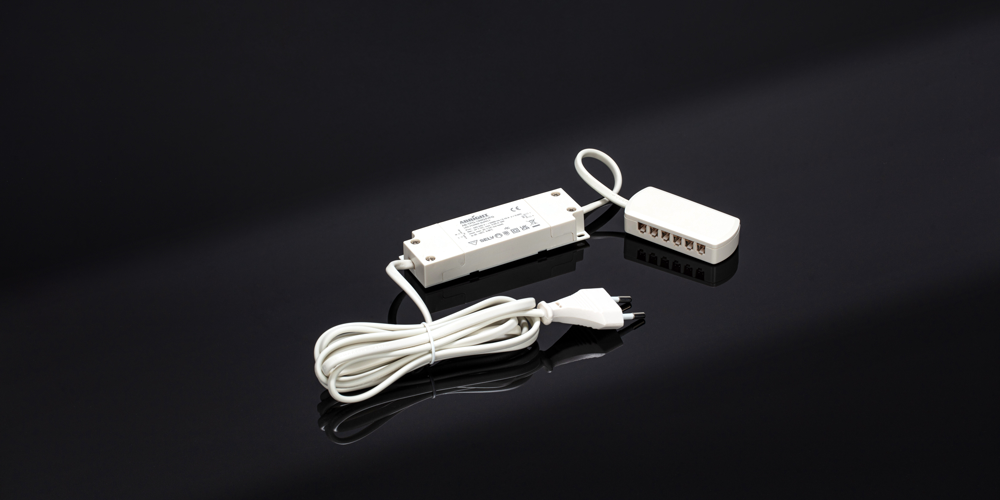
Final Recommendations for B2B Purchasing Managers
When drafting Commercial Lighting Specifications for upcoming commercial developments:
- Specify 24V DC for seamless linear under-cabinet runs where smooth dimming (0-10V, DALI, or PWM) and ultra-slim fixture profiles are paramount.
- Select Line Voltage Fixtures when labor costs during installation must be minimized, or where remote power supply enclosure locations are unfeasible.
- Verify Regulatory Compliance: Ensure all selected luminaires carry verified certifications (UL/ETL for North America, CE/RoHS for Europe) and provide clear photometric files (IES/LDT) for accurate lighting design modeling.
At Abright Lighting, our engineering team manufactures certified, commercial-grade under-cabinet luminaires engineered for maximum thermal stability, optical precision, and compliance with global electrical standards. Contact our OEM/ODM technical desk to discuss customized voltage, CCT, and mounting options for your next project.
Post time: Jul-24-2026